Practical Guide
This article is written for NSW tyre shops, workshops, dealers, warehouses, and fleet depots that want cleaner operations, easier pickups, and stronger compliance routines.
Why August is the right month to prepare
By the time spring arrives, many NSW tyre shops, workshops, fleet depots, and dealership service centres are already busier. More inspections, more replacement work, more seasonal travel preparation, and more customer bookings all create the same back-of-house pressure: used tyres start building faster than the site expected.
August gives managers a useful window. Winter conditions are still fresh in everyone's mind, but there is enough time to reset the yard before spring volume becomes the daily problem. A spring tyre collection plan does not need to be complicated. It needs a clear pickup trigger, a clean staging area, and records that make every collection easy to trace.
The local pressure points NSW sites should expect
Spring demand is not identical across every NSW business. Metro tyre shops may feel higher retail turnover. Fleet depots may see maintenance campaigns before warmer travel periods. Regional workshops may need more flexible pickup windows because distance, access, and branch volume vary. The best plan starts with the local pressure that actually affects the site.
- Tyre shops: faster customer turnover can fill storage zones before the next normal pickup.
- Mechanical workshops: mixed service work can push used tyres into access lanes if the staging area is not protected.
- Fleet depots: planned maintenance runs can create short bursts of tyre volume that need extra collection capacity.
- Dealer groups: each branch may have different volume, but the network still needs one clear operating rule.
- Warehouses and commercial sites: inherited stock or seasonal clear-outs can quickly turn into a bulk collection job.
Signals your site needs a spring reset
- Tyres are spreading outside the nominated storage zone
- Staff are booking collection only after overflow starts
- The last pickup date or reference is hard to find
- Access lanes need to be cleared before every collection
- Spring bookings are expected to lift workshop volume
What a stronger August plan creates
- A pickup trigger based on real tyre volume
- A clean staging area that stays collection-ready
- Scheduled pickups before the yard reaches pressure point
- Cleaner records for managers, finance, and compliance review
- A faster path from service bay to responsible tyre recovery
Set a pickup trigger before spring volume arrives
The most useful change is often the simplest: decide when collection should be booked before the site is full. That trigger might be a tyre count, a storage percentage, a weekly rhythm, or a branch rule. The exact number depends on the site, but the principle is the same. Staff should know when to act without waiting for a manager to notice a messy yard.
For high-volume tyre shops and dealers, scheduled pickups are usually easier than repeated urgent calls. For fleets or depots with campaign-based maintenance, a normal schedule plus booster collections can prevent short bursts of volume from turning into access problems.
Make the storage zone collection-ready
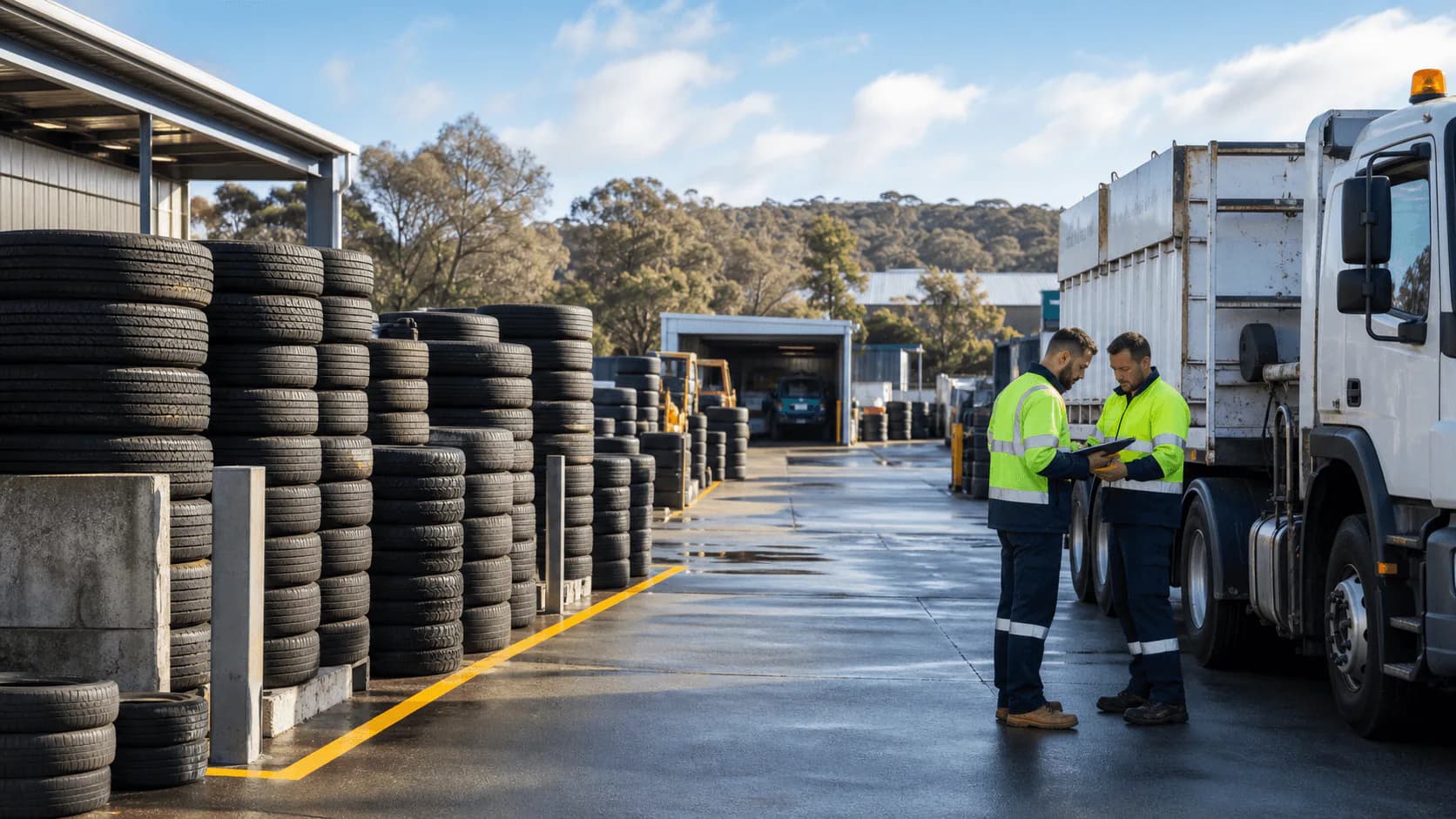
A spring plan fails quickly if tyres are staged wherever space is available. Collection-ready storage should be consolidated, accessible, separated from general waste, and easy for staff to manage during a busy day. The goal is not a perfect yard. The goal is a repeatable setup that keeps tyres moving without disrupting customer work.
August is also a good time to review what winter exposed. If rain created pooling, if wet tyres were harder to move, or if access lanes became unreliable, fix those issues before warmer-month volume adds more pressure.
- Keep one tyre zone: scattered piles slow loading and make volume harder to judge.
- Protect vehicle access: collection should not require moving customer cars, pallets, bins, or equipment first.
- Separate waste streams: keep tyres away from liquids, scrap, general rubbish, and contaminated material.
- Nominate an owner: one person should know the pickup trigger, booking process, and record location.
Use records as a sales and compliance advantage
Good tyre collection records are not only for audits. They help managers compare branches, answer customer or procurement questions, control costs, and prove that used tyres are leaving through a responsible pathway. For businesses competing for fleet, government, or commercial customers, that confidence can support stronger conversations about sustainability and operational discipline.
At minimum, record the pickup date, site or branch name, approximate volume, invoice or collection reference, and any access or overflow notes. The record should be easy to find later, not buried in one person's inbox.
Turn the August plan into a client-winning routine
A cleaner tyre collection system makes the business easier to run, but it also changes what customers and commercial partners see. A controlled yard, predictable pickup rhythm, and clear recovery records signal that the site takes waste handling seriously. That matters for tyre retailers, workshops, fleet providers, dealer groups, and any business trying to present itself as organised, compliant, and environmentally responsible.
If your NSW site expects spring volume to rise, use August to set the rhythm now. Review storage, choose the pickup trigger, clean up records, and speak with a collection partner before urgent overflow becomes the reason you call.
Next steps for NSW businesses
If your site needs a recurring rhythm, start with Scheduled Tyre Pickups in NSW. If winter exposed storage issues, review Winter Tyre Storage and Collection Challenges in NSW and Collection-Ready Tyre Storage. For dealer networks, compare Dealer Group Tyre Collection in NSW. To organise pickup support, explore Used Tyre Collection NSW, Commercial Tyre Disposal NSW, or contact ATR Eco.
Common Questions
Common questions about Spring Tyre Collection Plan for NSW Businesses
Why should NSW businesses plan tyre collection in August?
August gives workshops, tyre shops, fleets, and dealers time to reset storage and pickup cadence before spring service demand increases and used tyres start building faster.
What is the best tyre pickup schedule before spring?
The best schedule depends on site volume. High-volume tyre shops may need scheduled weekly or fortnightly pickup, while fleet depots may need a normal cadence plus extra collections during maintenance campaigns.
How can tyre shops reduce urgent disposal calls?
Set a clear pickup trigger, keep tyres in one accessible staging zone, review volume weekly, and book collection before the storage area reaches overflow.
Can ATR Eco support commercial tyre collection across NSW?
ATR Eco supports NSW businesses with used tyre collection, commercial tyre disposal, scheduled pickups, and bulk collection planning for sites with higher or changing tyre volumes.
Next Step
Turn the guidance into a workable pickup plan
If you are reviewing tyre collection providers, compare the commercial tyre pickup services, the dedicated used tyre collection NSW page, or the broader tyre disposal for businesses NSW page. You can also request a site-specific collection plan through ATR contact, or review local coverage for Sydney, Newcastle, Wollongong, Central Coast, and Blue Mountains.