Practical Guide
This article is written for NSW tyre shops, workshops, dealers, warehouses, and fleet depots that want cleaner operations, easier pickups, and stronger compliance routines.
Why winter changes the way your site handles tyres
During the warmer months, most NSW commercial sites can manage tyre storage with a simple staging area, clear access, and a scheduled pickup. Winter breaks that simplicity. Cold mornings make early starts slower. Rain turns staging areas muddy. Wet tyres are heavier and harder to move. Access lanes that worked fine in September become slippery and difficult to navigate in July.
For tyre shops, workshops, depots, and warehouse operators across NSW, winter does not eliminate the need for tyre collection. It changes the conditions under which collection happens. Businesses that adjust their storage setup, pickup timing, and site routines for the colder months avoid the problems that catch less-prepared sites off guard.
The main winter challenges for commercial tyre sites
Winter introduces several practical issues that affect how tyres are stored, staged, and collected. Most of these problems are predictable and preventable with small adjustments.
- Water pooling in staging areas: uncovered tyre zones collect rainwater, making the area heavier, messier, and harder to load quickly.
- Slippery access lanes: wet concrete, gravel, or asphalt reduces traction for collection vehicles and forklifts, slowing the pickup.
- Heavier loads: wet tyres absorb water and become significantly heavier, which affects loading time and transport logistics.
- Mud and contamination: wet conditions mix dirt into the tyre pile, creating contamination that can delay processing or require sorting before pickup.
- Reduced daylight hours: shorter days mean less natural light for early-morning or late-afternoon pickups, which can affect site visibility and safety.
Winter problems that create delays
- Staging areas with no drainage or cover
- Access lanes that flood or become muddy
- Tyres scattered across wet ground instead of consolidated
- No clear path for collection vehicles in poor weather
- Staff reluctant to handle wet, cold tyres outside normal hours
What prepared winter sites do differently
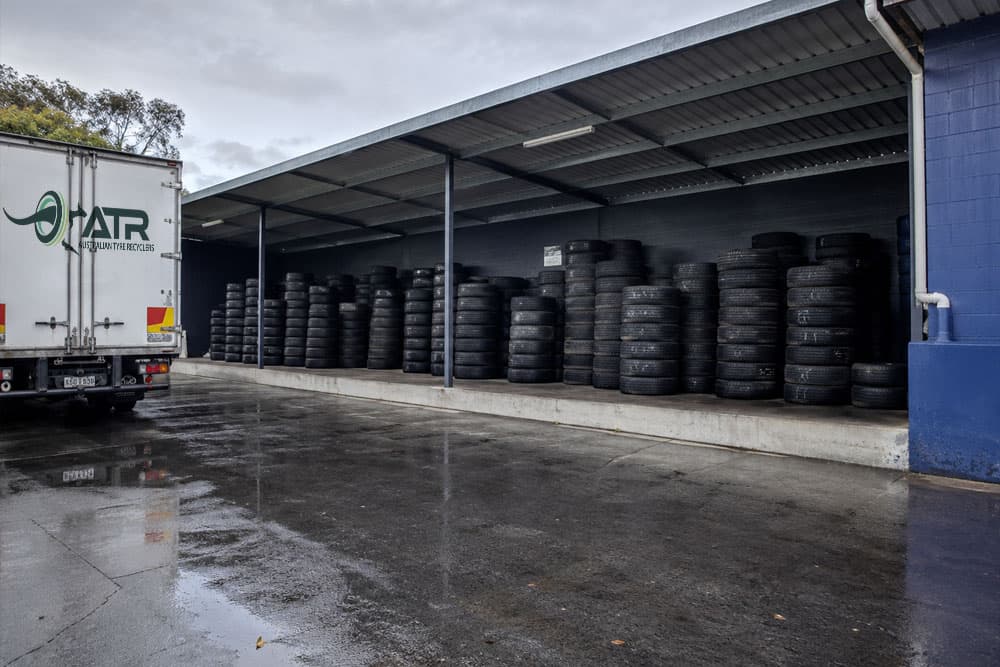
- Covered or raised staging areas that shed water
- Gravel or concrete pads with proper drainage
- Consolidated tyre zones that stay above ground level
- Pre-pickup checks that confirm access in wet conditions
- Adjusted pickup timing to avoid peak rain periods
How to winterproof your tyre staging area
The staging area is the most important part of your winter setup. A well-prepared zone keeps tyres drier, makes loading faster, and reduces contamination from mud and standing water.
- Raise the staging surface: use pallets, raised platforms, or a gravel pad to keep tyres off the ground and away from standing water.
- Add basic cover: a simple roof structure, tarp, or shade cloth keeps the worst rain off the tyre zone without requiring a full building.
- Improve drainage: ensure water flows away from the staging area rather than pooling around or under the tyres.
- Consolidate before rain hits: move tyres into the zone early in the week rather than scattering them across the yard and hoping for dry weather.
- Mark the zone clearly: wet weather blurs boundaries. Use clear signage or painted lines so staff know exactly where tyres belong even in poor visibility.
Adjusting your pickup cadence for winter
Winter often changes how quickly tyres accumulate. Cold weather can slow workshop output in some businesses, while others see an uptick from seasonal fleet servicing, pre-winter vehicle checks, or end-of-financial-year clear-outs. The key is to review your pickup frequency against what actually happens during the colder months, not what happened in summer.
A site that managed comfortably with fortnightly pickups from October to March may find that weekly collections are needed in June and July if volume increases or if the staging area fills faster due to wet conditions reducing usable space.
Winter pickup timing and communication
Collection timing matters more in winter. A pickup scheduled for 7:00 AM on a cold, wet Monday morning is a different job than the same pickup on a dry Wednesday afternoon. Sites that communicate weather-related constraints to their collection partner avoid delays and keep the process moving.
- Confirm access in advance: let your provider know if rain is forecast and whether the staging area or access lane may be affected.
- Request flexible windows: winter collections sometimes benefit from mid-morning timing when frost has cleared and daylight is at its best.
- Pre-check the day before: walk the access lane and staging zone the afternoon before a scheduled pickup to confirm readiness.
- Communicate changes early: if conditions deteriorate, notify your provider as soon as possible so the route can be adjusted without losing the collection slot.
Protecting records and documentation through winter
Paper records stored near a tyre staging area are vulnerable to moisture, spray, and accidental water exposure during winter. For businesses that rely on physical pickup logs, invoices, or collection references, the colder months are a good time to digitise or protect important documents.
- Move records off-site: keep pickup references and invoices in a dry office or digital system, not in a shed or container near the staging zone.
- Use waterproof storage: if physical records must stay near the site, use sealed folders or weatherproof containers.
- Digitise on the day: photograph or scan collection proofs immediately after pickup, before paper records have a chance to get wet or lost.
- Back up weekly: ensure digital copies are stored in a cloud system or shared drive that is accessible from multiple locations.
Winter-specific compliance considerations
NSW EPA requirements do not change during winter, but the conditions that support compliance become harder to maintain. Wet, muddy staging areas can lead to contamination. Slippery access lanes can delay collections. Shorter days can compress the available pickup window. Each of these factors increases the risk of non-compliance if the site is not prepared.
- Keep staging clean: remove mud, leaves, and debris from the tyre zone regularly to maintain a clear separation between tyres and general waste.
- Maintain access standards: a collection vehicle that cannot reach the staging area due to wet conditions creates a compliance gap, not just a logistical one.
- Document weather impacts: if a pickup is delayed or conditions affect the collection, note it in your records so auditors understand the context.
- Review monthly: winter is a good time to do a quick monthly review of records, staging quality, and pickup performance rather than waiting for a quarterly check.
Prepare now for a smoother winter season
Winter tyre storage and collection challenges in NSW are predictable. The sites that handle them best are not the ones with the most expensive infrastructure. They are the ones that adjust their staging, timing, and communication before the cold weather arrives, not after the first wet week catches them off guard.
If your site needs a winter pickup plan or a discussion about seasonal volume changes, review our Scheduled Tyre Pickups in NSW guide for cadence planning. For storage improvements, see Collection-Ready Tyre Storage. If you want to compare options for your workshop or depot, explore Used Tyre Collection NSW, Commercial Tyre Disposal NSW, or contact ATR to discuss your winter requirements.
Common Questions
Frequently asked questions
Does winter affect tyre collection scheduling in NSW?
Winter conditions such as rain, reduced daylight, and wet access lanes can affect pickup timing. Sites that communicate weather constraints to their collection partner and confirm access in advance usually avoid delays.
How should tyres be stored during wet weather?
Keep tyres on raised surfaces or pallets, use basic cover such as a tarp or roof structure, ensure proper drainage around the staging zone, and consolidate tyres into a single area rather than leaving them scattered across wet ground.
Do wet tyres cost more to collect?
Wet tyres are heavier and may take longer to load, which can affect pickup efficiency. Keeping tyres dry through proper storage and cover helps maintain efficient collection conditions.
What should businesses check before a winter pickup?
Confirm the access lane is clear and passable, verify the staging area is not waterlogged, check that tyres are consolidated in the correct zone, and ensure collection records are stored in a dry location.
Next Step
Turn the guidance into a workable pickup plan
If you are reviewing tyre collection providers, compare the commercial tyre pickup services, the dedicated used tyre collection NSW page, or the broader tyre disposal for businesses NSW page. You can also request a site-specific collection plan through ATR contact, or review local coverage for Sydney, Newcastle, Wollongong, Central Coast, and Blue Mountains.