Practical Guide
This article is written for NSW tyre shops, workshops, dealers, warehouses, and fleet depots that want cleaner operations, easier pickups, and stronger compliance routines.
Scaling Sustainability: The Fleet Management Challenge
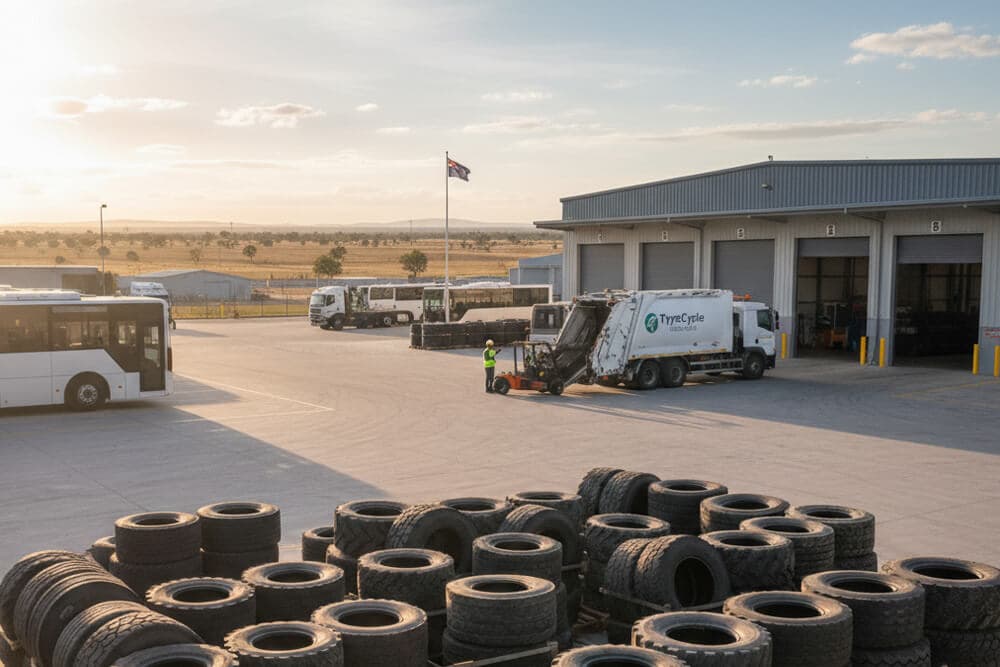
For NSW fleet operators, end-of-life tyres (ELTs) are more than just waste—they are a high-volume logistical challenge that can either scale smoothly or create operational gridlock. In a busy depot, a sudden influx of casing returns after a maintenance peak can quickly overwhelm your storage capacity, leading to safety hazards and delayed vehicle servicing.
The most successful fleet managers treat tyre disposal like any other part of their supply chain: with precision, predictability, and clearly defined ownership. Moving from ad-hoc pickups to a systemized management model isn't just a compliance requirement; it’s a necessary move for maintaining depot uptime and high-volume stability.
The 'Operational Heartbeat' Model
To keep a high-volume depot running without interruption, we recommend adopting the Operational Heartbeat model. This shifts the focus from 'empty the yard' to 'manage the flow':
- Centralized Consolidation: Designate a single, forklift-accessible consolidation point. Spreading tyres across multiple bays or corners increases handling labor and slows down collection.
- Volume-Based Thresholds: Define exactly what '75% capacity' looks like for your depot. This is your trigger point, ensuring you book your next pickup before the yard reaches a critical overflow state.
- The Scheduled Sync: Align your tyre pickups with your broader logistics schedule. If your peak delivery days are Mondays and Wednesdays, schedule your tyre collection for Tuesdays to maximize yard space when you need it most.
- Single-Point Accountability: Nominate a 'Tyre Champion' for each site. This person owns the relationship with the collector, manages the count, and ensures documentation is uploaded to your central system.
Managing the 'Campaign Surge'
Fleet operations often experience 'campaign surges'—periods where large numbers of tyres are replaced simultaneously across a vehicle class. These spikes can break a standard disposal routine.
Advanced fleet managers communicate these surges to their collection partners in advance. By adding 'booster' pickups to your regular schedule during maintenance campaigns, you prevent depot congestion and ensure your technicians can work without equipment or tyres blocking their path. Proactive communication is the key to preventing logistical bottlenecks.
The Fleet Audit Trail: No-Stress Compliance
For corporate and government fleet contractors, traceability is non-negotiable. A missed receipt or an unclear chain of custody can lead to significant contract penalties. Your record-keeping should be lightweight but ironclad:
Automated Verification: Use your digital job-card system to track tyre removals, then reconcile this against your collection partner's monthly recovery reports. This 'double-entry' system is the gold standard for audit readiness, proving that every tyre that left your fleet entered a licensed recovery pathway.
Optimize Your Depot Logistics
High-volume stability is achieved through systemization, not effort. If your depot feels like it's constantly 'catching up' on tyres, it's time to install a heartbeat.
Explore our Enterprise Collection Solutions for multi-site fleet networks, or speak with our logistics experts to plan your next maintenance campaign.
Further Reading: Master your internal SOP with our Prep Guide for Busy Sites.
Next Step
Turn the guidance into a workable pickup plan
If you are reviewing tyre collection providers, compare the commercial tyre pickup services, request a site-specific collection plan through ATR contact, or review local coverage for Sydney, Newcastle, and Wollongong.