Practical Guide
This article is written for NSW tyre shops, workshops, dealers, warehouses, and fleet depots that want cleaner operations, easier pickups, and stronger compliance routines.
The handover problem nobody listed
The keys have changed hands, the shelves are empty and the incoming tenant is ready to use the warehouse. Then someone opens the rear bay and finds a group of tyres that never appeared in the condition report.
Some may be passenger tyres. Others may be truck casings, tyres on rims or stock that has been sitting there long enough for its history to be unclear. The quickest response is not to start loading them into the nearest vehicle. First work out what is there, who needs to authorise removal and whether the collection vehicle can reach it.
Document the load before arranging collection.
Photograph the stock before anything moves
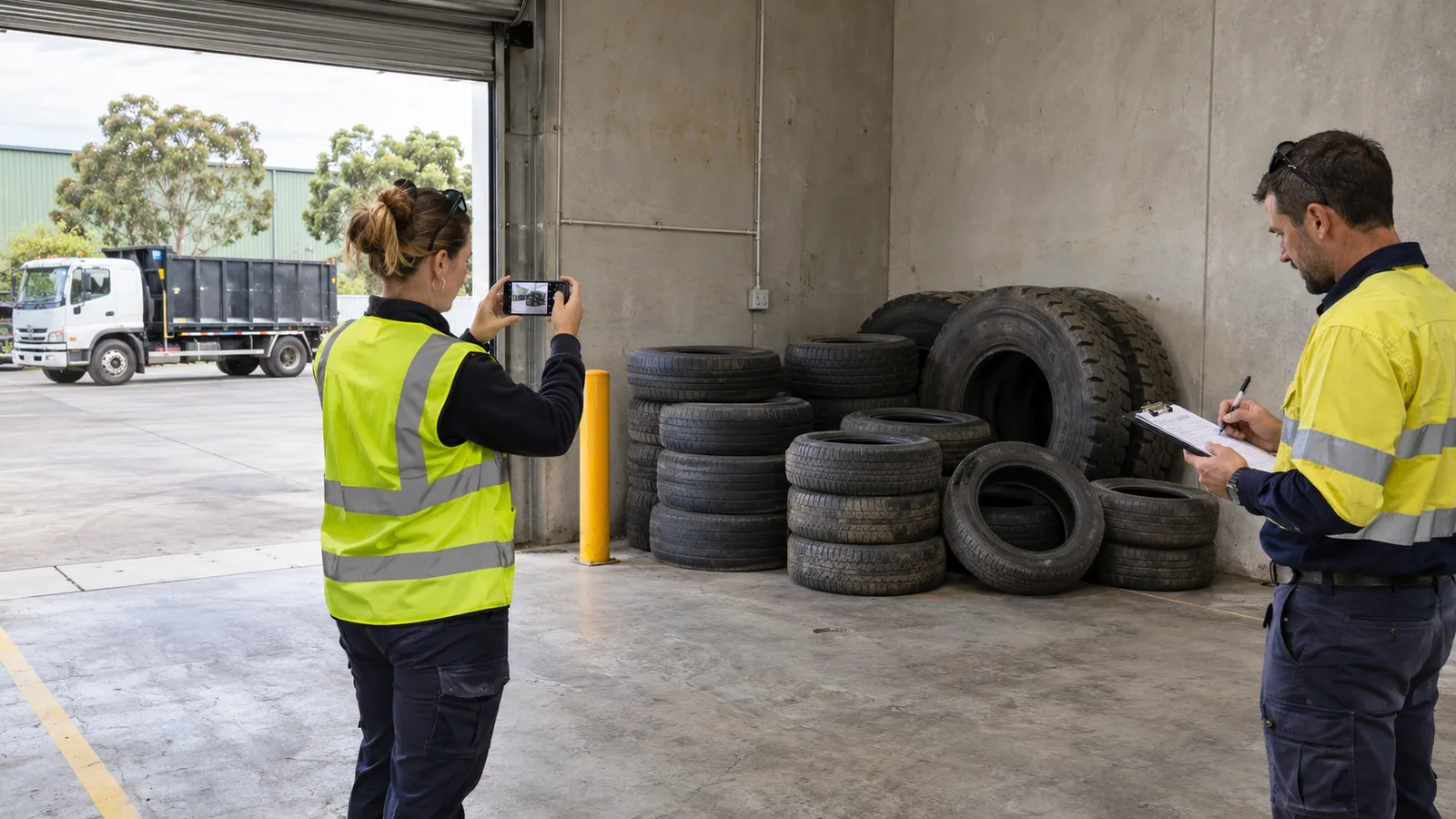
Take wide photos that show the full storage area, then photograph any unusual tyres, rims or mixed materials. Keep the original arrangement visible until the property manager, outgoing tenant or owner has agreed on the scope.
The photos record what was present at handover and separate inherited stock from tyres produced by the new occupant later.
If tyres are spread across several rooms or yards, record each location. Do not combine everything into one pile simply to make the warehouse look tidy. Moving the stock too early can hide access problems and make the quantity harder to judge.
Work out what is actually there
An exact count is helpful, but a sound estimate by tyre type is enough to start a conversation with ATR. Count visible rows where practical and note any stock hidden behind shelving, cages or equipment.
- Passenger and SUV tyres: estimate these separately from larger commercial casings.
- Light-commercial and truck tyres: note the approximate count and sizes.
- OTR or unusual tyres: include a person, pallet or tape measure in the photo for scale.
- Tyres on rims: count these separately.
- Mixed waste: identify batteries, oil containers, scrap metal or general rubbish near the tyres.
- Condition: mention water, soil, fire damage or other contamination.
Confirm who can approve the work
Responsibility for inherited stock can depend on the lease, handover documents and agreements between the owner, former tenant and incoming tenant. ATR cannot decide that question for the parties, but the collection should have one authorised contact before it is booked.
That person should confirm which tyres are included, who will receive the quote, who can approve access and where the collection record should be sent. If ownership is still disputed, keep the stock documented and avoid mixing it with new operational waste.
Property teams dealing with a time-sensitive vacancy can still request an assessment while the commercial responsibility is being resolved. Just be clear that the job is not yet authorised.
Check the loading route, not just the tyre bay
A warehouse can have a wide roller door and still be difficult to service. Parked vehicles, low awnings, narrow shared driveways, security gates and busy loading periods can all affect collection.
Send photos of the route from the site entrance to the tyres. Include gate dimensions if access is tight, note any induction requirement and nominate a time when the loading area can be kept clear. If the tyres are inside, explain whether they are at ground level and whether staff or equipment will be available under the agreed arrangement.
The site readiness checklist covers the practical details that help collection day run properly.
What ATR needs to assess the removal
A useful enquiry can fit in one email. Send the warehouse suburb, the best site contact, several clear photos and an estimated count by tyre type. Mention rims, unusual sizes, mixed waste and any deadline linked to settlement, lease commencement or contractor access.
Also say whether this is a one-off inherited stock removal or the start of an ongoing operation that will generate used tyres. ATR can then discuss a bulk clear-out, a collection plan for future volume or both.
For larger inherited loads, review the bulk tyre collection guide. If the quantity is hard to estimate, photos from several angles are more useful than a confident guess.
Keep the collection record with the property file
Waste tyres need to go to a place that can lawfully receive them. NSW EPA guidance also recommends keeping written records about the transporter, quantity and receiving facility. Applicable loads moved within NSW must be tracked through the Integrated Waste Tracking Solution.
Keep the quote, approval, collection docket and any destination information with the warehouse handover documents. That gives the owner or tenant a clear record of how the inherited stock left the site. Current requirements are available in the NSW EPA waste tyre guidance.
Prevent the same issue at the next handover
Once the warehouse is clear, add tyre stock to routine inspections and exit documentation. Photograph the nominated storage area, record who owns the tyres and agree on removal before the final handover date.
For sites that will continue generating tyres, set a collection trigger based on usable space rather than waiting for the bay to overflow. A repeatable pickup arrangement is easier to manage than another inherited-stock clean-up.
To arrange an assessment, contact ATR Eco with the site location, photos, estimated quantities and required timeframe.
Common Questions
Warehouse tyre removal FAQs
Who is responsible for tyres left in a leased warehouse?
Responsibility depends on the lease, handover documents and agreements between the owner, former tenant and incoming tenant. Confirm who can authorise and pay for removal before booking the work.
Do I need an exact tyre count before contacting ATR?
No. Start with a reasonable estimate by tyre type and clear photos from several angles. Identify truck tyres, OTR tyres, rims, contamination and mixed waste separately.
Can ATR remove tyres from inside a warehouse?
Collection depends on vehicle and loading access, tyre location, quantity and site conditions. Send photos of the tyres and the route from the entrance so ATR can assess the job.
What records should be kept after warehouse tyre removal?
Keep the approved quote, collection docket, quantity details and available destination or tracking information with the property handover or waste records.
Next Step
Turn the guidance into a workable pickup plan
If you are reviewing tyre collection providers, compare the commercial tyre pickup services, the dedicated used tyre collection NSW page, or the broader tyre disposal for businesses NSW page. You can also request a site-specific collection plan through ATR contact, or review local coverage for Sydney, Newcastle, Wollongong, Central Coast, and Blue Mountains.