Practical Guide
This article is written for NSW tyre shops, workshops, dealers, warehouses, and fleet depots that want cleaner operations, easier pickups, and stronger compliance routines.
When the tyre pile starts becoming a business problem
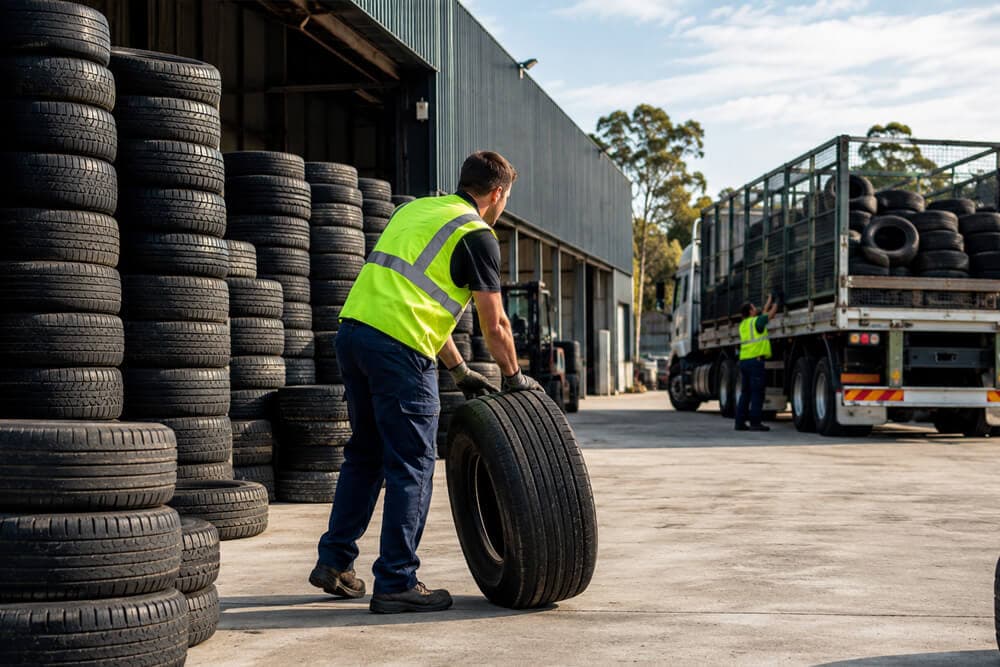
Used tyre disposal usually becomes urgent when tyres start affecting the site itself. They take over the storage zone, creep into access paths, slow down loading, or make the yard look less controlled than the business wants customers or staff to see.
For NSW tyre shops, dealer service departments, fleet depots, and warehouse sites, the right pickup option has to do more than remove a pile once. It needs to handle commercial volume, provide clear records, and fit the rhythm of the site so the same problem does not return a few weeks later.
Why commercial sites need more than a one-off drop-off
A household might need to move a few old tyres. A workshop or depot can generate used tyres every day, often across passenger, light commercial, fleet, and mixed stock. That changes the job completely.
- Volume is recurring: commercial sites need a pickup model that keeps pace with daily tyre flow.
- Storage pressure builds quickly: tyres can block access lanes, loading zones, and workshop space if collection timing slips.
- Documentation matters: managers need collection proof, invoices, or references that are easy to retrieve later.
- Mixed stock is common: old tyres, overflow piles, and inherited stock often need a more controlled collection plan.
- Local coverage has to be reliable: the right provider should make pickup timing easier to plan, not harder to chase.
Signs your current setup is not working
- Tyres are sitting outside the nominated storage area
- Staff are moving tyres more than once before collection
- Pickup is only booked when the yard is already under pressure
- Managers cannot quickly confirm the last few collections
- Old tyres and new daily volume are mixed together
What a better pickup routine should create
- A clear point for when pickup should be booked
- A cleaner staging area that stays inside its boundary
- Fewer emergency clear-outs
- Collection records that are easy to find
- A service rhythm that matches real tyre volume
How to choose a local used tyre disposal partner
A good disposal partner should reduce friction for the site, not just arrive once and take tyres away. Before booking, compare the service against the way your business actually operates.
- Check whether they handle commercial volume: a provider that suits small one-off loads may not suit a busy tyre shop or fleet depot.
- Ask about pickup cadence: recurring collection can prevent overflow better than waiting for emergencies.
- Confirm the accepted tyre types: passenger, light commercial, truck, and mixed stock may require different handling.
- Look for clear documentation: collection records should be simple to keep and review.
- Assess site access requirements: the pickup plan should match loading access, staging layout, and business hours.
Closest is useful, but consistency matters more
Local proximity helps, especially when the site needs a fast reset. But the closest option can still create problems if the service is inconsistent, cannot handle the volume, or gives the business poor visibility after collection.
For commercial tyre disposal in NSW, the better question is simple: can this provider service the site repeatedly, handle the volume safely, and keep the pickup process predictable enough that the yard stays under control?
When a one-off pickup is enough
A one-off used tyre pickup can work when the site has a clear backlog, a branch reset, inherited stock, or a temporary spike that does not reflect normal weekly volume. In that case, the goal is to clear the site and return it to a workable baseline.
After the pickup, the business should still set a booking trigger. Otherwise the site can drift back into the same position within a few weeks.
When scheduled collection is the better answer
Scheduled collection is the better option when used tyres are generated every day. Tyre retailers, dealer service departments, fleet depots, and multi-site operators usually need repeatable pickup timing rather than occasional disposal calls.
A scheduled routine helps managers plan around storage capacity, staff availability, loading access, and customer-facing site presentation.
A quick site check before booking
- Can your team estimate the current tyre volume on site?
- Are tyres staged in one clear area or spread across the yard?
- Is the loading path accessible for collection?
- Are tyres separated from rims, pallets, liquids, and general waste?
- Can you find the last few collection records quickly?
- Would a one-off clear-out solve the issue, or does the site need a recurring pickup plan?
Use the pickup to reset the site properly
The best outcome is not only that the tyres leave. It is that the business comes out with a cleaner staging area, clearer records, and a pickup plan that prevents the next overflow problem.
For practical support, start with Used Tyre Collection NSW. Larger sites can compare Tyre Disposal for Businesses NSW or Commercial Tyre Disposal NSW. ATR also supports local service areas including Sydney, Newcastle, Wollongong, Central Coast, and Blue Mountains.
Common Questions
Common questions about Used Tyre Disposal Near Me in NSW: A Practical Guide for Businesses
How do I find commercial used tyre disposal near me in NSW?
Look for a provider that services your suburb, handles your tyre types and volume, explains the receiving pathway, and supplies records after collection.
Can a business use a household tyre drop-off service?
Commercial sites usually need a service designed for recurring or bulk volumes. Confirm quantity limits, accepted tyre types, access requirements, and whether collection records are provided.
What details are needed to arrange local tyre pickup?
Provide the suburb, approximate tyre count, tyre sizes, whether rims or other waste are mixed in, site access details, and whether the need is recurring or a one-off clear-out.
Next Step
Turn the guidance into a workable pickup plan
If you are reviewing tyre collection providers, compare the commercial tyre pickup services, the dedicated used tyre collection NSW page, or the broader tyre disposal for businesses NSW page. You can also request a site-specific collection plan through ATR contact, or review local coverage for Sydney, Newcastle, Wollongong, Central Coast, and Blue Mountains.