Practical Guide
This article is written for NSW tyre shops, workshops, dealers, warehouses, and fleet depots that want cleaner operations, easier pickups, and stronger compliance routines.
A better quote starts with a better collection picture
When a tyre shop, dealership or fleet asks for a collection price, the tyre count is only one part of the job. Tyre category, rims, access, location and urgency can all change how the pickup needs to be planned. A short but complete enquiry helps the collector assess the load properly instead of pricing from assumptions.
That matters for the customer as well. Clear information can reduce follow-up calls, avoid sending the wrong collection capacity and make it easier to compare a one-off pickup with a recurring service. The goal is not to produce a complicated inventory. It is to give ATR Eco enough detail to understand what is waiting, where it is and how it can be collected.
1. Separate the tyre types before estimating quantity
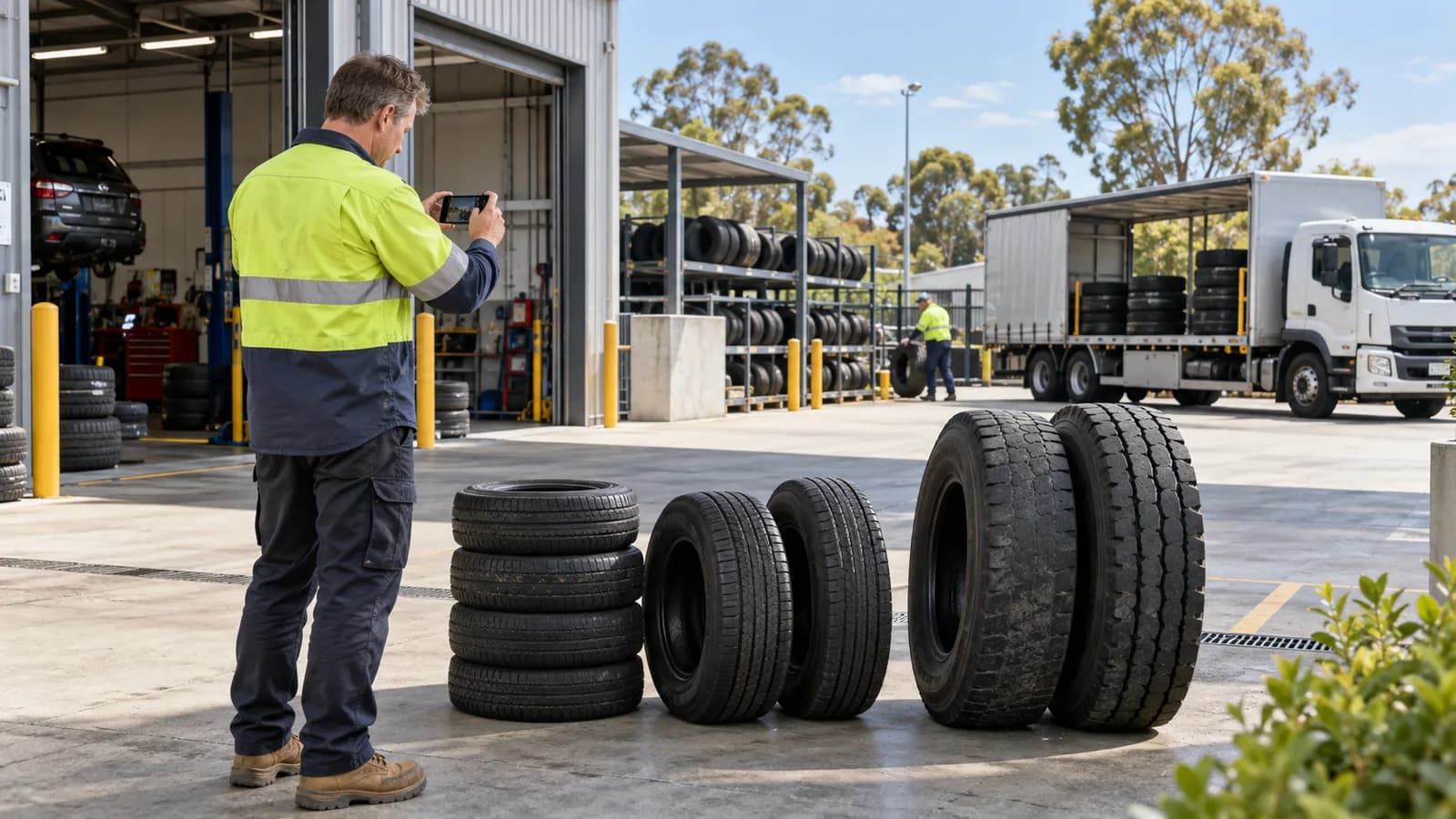
A load of passenger tyres is different from the same count of truck or off-the-road tyres. Larger casings occupy more space and may need different handling. Mixed loads are common, but they should be described rather than presented as one total.
- Passenger tyres: standard car and SUV replacement tyres.
- Light-commercial tyres: van, ute and smaller commercial vehicle tyres.
- Truck tyres: heavy-vehicle casings that require more collection capacity.
- OTR or specialist tyres: provide dimensions or photographs so suitability can be checked.
- Non-standard stock: identify damaged, filled, contaminated or unusual items before booking.
Useful details
- Count by tyre category
- Loose or still fitted to rims
- Current stock plus expected additions
- One clear photo of the full load
- Close-up photo of unusual tyres
- Preferred pickup timeframe
Details that create uncertainty
- A pile without an estimated count
- One total for mixed passenger and truck tyres
- No mention of rims or other materials
- Photos that hide the back of the stockpile
- An address without access information
- Urgent pickup without an availability window
2. Give a realistic quantity, not a perfect one
Most businesses do not need to count every casing twice before making an enquiry. A reliable estimate by category is normally more useful than an exact total that combines several tyre sizes. Count visible rows where possible, note any tyres hidden behind the main group and explain whether more tyres will be added before collection.
For an established workshop, recent replacement volume can help. If the site normally produces a similar number each week, say how long the current stock has accumulated. For a warehouse clear-out or inherited stockpile, provide wide photographs from more than one angle. ATR can then ask focused questions before confirming the collection plan.
If your site regularly reaches the same quantity, compare a recurring service with repeated urgent bookings. The scheduled tyre pickup guide explains how a collection trigger can be matched to real site volume.
3. Identify rims, contamination and mixed materials
Tyres still fitted to rims should be counted separately. The same applies when tyre storage contains tubes, batteries, oil containers, general workshop waste or vehicle parts. Do not assume those materials can travel in the same collection.
Tell the collector about water, soil, concrete, product residue, fire damage or other contamination before the vehicle arrives. Early disclosure allows the load to be assessed and prevents a planned pickup becoming a partial or unsuccessful collection. Keeping tyres separate from unrelated waste also makes future counts and collection records clearer.
4. Describe the site and collection access
The collection address does not show whether a vehicle can reach the tyres. A metropolitan workshop with a narrow rear lane needs a different plan from an open fleet depot or warehouse yard. Include the collection point, gate restrictions, loading area and the hours when staff can provide access.
- Vehicle access: note narrow lanes, low clearances, steep entries or shared loading zones.
- Tyre location: explain whether stock is at ground level, behind a workshop or inside a secured area.
- Operating window: identify opening hours, peak customer times and any induction requirement.
- On-site contact: provide the person who can confirm the load and open the collection area.
- Multiple sites: list each address and quantity separately rather than combining the network total.
5. Choose the service type that matches the problem
A one-off bulk collection is appropriate for a backlog, site clean-up or unusually busy replacement campaign. A scheduled service is usually better when tyres accumulate consistently and the storage area reaches the same limit every month.
Tell ATR whether the request is for an immediate clear-out, an initial pickup followed by regular service, or a review of an existing schedule. Also mention the practical deadline. “Before the storage bay reaches capacity next Friday” is more useful than “as soon as possible” because it connects urgency to an operating constraint.
Businesses comparing service formats can review ATR commercial tyre pickup services and the bulk tyre collection guide.
What affects a commercial tyre collection quote?
Collection pricing can depend on tyre categories, quantity, location, access, loading requirements, service frequency and the condition of the load. Regional routing and unusual tyre sizes can also affect the plan. That is why a responsible quote should be based on the actual job rather than a generic per-tyre figure with unstated conditions.
Price is important, but it should be considered alongside lawful handling, collection reliability and documentation. NSW EPA guidance says businesses should ensure waste tyres go to a place that can lawfully receive them and keep accurate written records. Loads meeting the applicable tracking threshold must use the Integrated Waste Tracking Solution. Review the NSW EPA waste tyre transport guidance when planning commercial disposal.
For a deeper pricing explanation, see Tyre Disposal Costs in NSW.
Use this eight-point quote checklist
- Provide the business name, contact person and collection address.
- Estimate passenger, light-commercial, truck and OTR tyres separately.
- Identify tyres on rims and any unusual or contaminated stock.
- Attach clear photographs showing the complete load and collection area.
- Describe vehicle access, opening hours and site restrictions.
- State whether you need one-off, bulk, recurring or multi-site collection.
- Give the preferred timeframe and explain any genuine site deadline.
- Mention expected future volume if you want a scheduled service proposal.
Turn the enquiry into a workable pickup plan
The best tyre collection enquiry is concise, specific and honest about uncertainty. You do not need a formal spreadsheet for an ordinary pickup. A category estimate, useful photographs and clear access notes are enough to begin a productive conversation.
When ATR understands the load before collection day, the team can discuss suitable timing, service format and information requirements with fewer assumptions. Request a tyre collection quote from ATR Eco and include your suburb, tyre categories, estimated quantities, site photographs and preferred collection window.
Common Questions
Common questions about How to Get a Fast, Accurate Used Tyre Collection Quote in NSW
What information do I need for a used tyre collection quote?
Provide the collection suburb and address, estimated quantity by tyre type, whether tyres have rims, photographs, site-access details, preferred timing and whether the service is one-off or recurring.
Do I need an exact tyre count before requesting a quote?
Not necessarily. A realistic estimate separated into passenger, light-commercial, truck and OTR categories is useful. Photographs can help clarify larger or mixed loads before collection is confirmed.
Can tyres on rims be included in a commercial pickup?
They should be identified separately when requesting a quote. Acceptance and handling depend on the agreed service, so disclose rimmed tyres and any other mixed materials before collection day.
What affects commercial tyre pickup pricing in NSW?
Tyre type, quantity, location, access, loading conditions, service frequency, urgency and unusual or contaminated stock can affect the collection plan and quote.
Does ATR Eco offer recurring tyre collection?
ATR Eco supports scheduled and one-off commercial enquiries for tyre shops, dealerships, fleet depots, warehouses and other NSW business sites. The suitable frequency depends on tyre volume, storage capacity, location and access.
Next Step
Turn the guidance into a workable pickup plan
If you are reviewing tyre collection providers, compare the commercial tyre pickup services, the dedicated used tyre collection NSW page, or the broader tyre disposal for businesses NSW page. You can also request a site-specific collection plan through ATR contact, or review local coverage for Sydney, Newcastle, Wollongong, Central Coast, and Blue Mountains.