Practical Guide
This article is written for NSW tyre shops, workshops, dealers, warehouses, and fleet depots that want cleaner operations, easier pickups, and stronger compliance routines.
Why tyre shops need a real used-tyre workflow
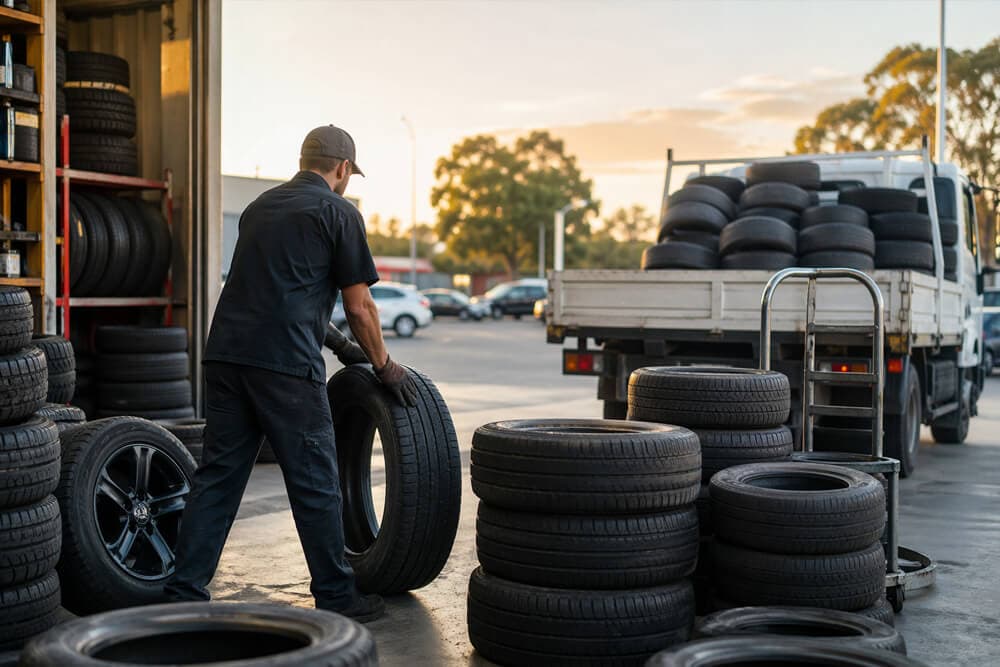
For tyre shops and dealerships, used tyres are produced every day. They come from retail replacements, fleet work, puncture repairs, seasonal promotions, and walk-in customers. If there is no clear workflow, the pile grows quietly until it starts affecting the way the site operates.
The strongest NSW tyre shops do not treat tyre disposal as a cleanup job at the end of the week. They treat used tyre collection as part of the service process. A tyre comes off a vehicle, moves to the correct staging area, gets counted or estimated, and leaves the site through a predictable commercial pickup routine. That simple discipline protects space, reduces admin pressure, and keeps the yard looking professional.
Where used tyre handling breaks down in busy shops
Most tyre shop problems start small. A few casings sit near a bay. A technician leaves tyres beside the workshop door. The official storage zone fills up. Then the team starts improvising.
- Tyres spread across the site: scattered piles make counts harder and slow down collection day.
- No booking trigger: the shop waits until the storage zone is full instead of booking before pressure builds.
- Mixed waste contamination: tyres get mixed with rims, pallets, cardboard, or general workshop waste.
- Unclear ownership: staff know tyres need to go, but nobody owns pickup timing or record keeping.
- Weak visibility: owners and managers cannot quickly tell whether the site is under control or heading toward overflow.
The ideal dealer workflow
A good workflow should be simple enough for a busy shop to follow during peak trading hours. It should not depend on one person remembering everything.
- Move tyres immediately: every removed tyre goes to the nominated used-tyre zone before it becomes clutter.
- Keep one clean staging area: the storage zone should be easy to access, away from customer paths, and free from mixed waste.
- Track volume weekly: use a simple count or estimate so pickup timing is based on real site pressure.
- Book before the site is full: schedule collection when the zone reaches a sensible threshold, not when it is already overflowing.
- Save collection proof: keep pickup details, invoices, or references in one place so records are easy to find later.
What tyre shops should expect from a collection partner
Tyre shops need more than a truck that turns up occasionally. A reliable commercial tyre collection partner should help the site stay predictable.
- Pickup timing that matches shop volume: high-volume dealers may need tighter collection cycles than smaller independent workshops.
- Clear communication: booking, pickup windows, and changes should not require constant chasing.
- Practical site understanding: the provider should understand bays, access lanes, customer vehicles, and limited storage space.
- Useful records: collection references and documentation should be simple to retain for internal checks.
- Support for growth: if the shop expands, adds fleet work, or joins a branch network, the pickup routine should scale with it.
How dealers can reduce disposal cost pressure
Disposal cost is not only about the rate charged for collection. A messy site can create hidden cost through staff time, blocked access, rushed pickups, and poor staging. Tyres that are clean, consolidated, and ready to collect are easier to manage than tyres spread across the yard.
The best way to keep cost pressure under control is to make collection predictable. When a tyre shop uses clear thresholds, scheduled pickup logic, and clean staging, the process becomes easier for both the site and the collection partner.
A quick self-check for shop owners and managers
- Can your team identify the used-tyre zone immediately?
- Do tyres move there after each job, or only when someone gets around to it?
- Is there a clear point when pickup should be booked?
- Can one person find the last three collection records quickly?
- Would a customer or insurer see the yard as controlled and professional?
Who this workflow is built for
- Independent tyre shops handling steady daily replacement volume
- Dealership service departments managing customer and fleet tyres
- Retail tyre chains that need branch-level consistency
- Workshops that want fewer emergency pickups and cleaner site presentation
Keep used tyres moving before they become a site problem
Used tyre collection works best when it is built into the daily rhythm of the shop. Move tyres quickly, keep the staging area clean, track volume before overflow, and work with a partner who understands commercial tyre sites.
If your shop is already dealing with overflow, start with our Bulk Tyre Collection in NSW guide. If you want a more predictable routine, review Scheduled Tyre Pickups in NSW. If you are comparing providers, read How to Choose a Commercial Tyre Collection Partner in NSW. For service-level support, explore our Used Tyre Collection NSW, broader Tyre Disposal for Businesses NSW, or contact ATR.
Common Questions
Frequently asked questions
How often should a NSW tyre shop book used tyre collection?
Frequency should follow actual replacement volume and available storage. Set a count or capacity trigger so pickup is booked before the nominated area reaches overflow.
What should tyre shops do before collection day?
Consolidate tyres in the nominated zone, keep access clear, separate rims and other waste where required, estimate volume, and have the booking reference available.
Can dealerships use scheduled used tyre pickup?
Yes. Scheduled pickup can suit dealership service departments and tyre retailers with steady volume, while additional collections can cover campaigns or short-term spikes.
Next Step
Turn the guidance into a workable pickup plan
If you are reviewing tyre collection providers, compare the commercial tyre pickup services, the dedicated used tyre collection NSW page, or the broader tyre disposal for businesses NSW page. You can also request a site-specific collection plan through ATR contact, or review local coverage for Sydney, Newcastle, Wollongong, Central Coast, and Blue Mountains.