Practical Guide
This article is written for NSW tyre shops, workshops, dealers, warehouses, and fleet depots that want cleaner operations, easier pickups, and stronger compliance routines.
The Safety-Efficiency Paradox
In a busy workshop or retail hub, it is tempting to view safety as a 'slow down' factor. We often see tyres tucked into corners, stacked high in delivery lanes, or mixed with scrap metal just to 'get them out of the way.' But after years of managing collections across NSW, we've observed a consistent truth: The safest sites are also the most profitable.
A site that is 'collection-ready' doesn't just reduce the risk of a workplace injury or a fire hazard; it drastically increases the speed of your operations. When your storage is disciplined, your staff spends less time moving tyres twice, and our collectors spend less time on your site, reducing disruption to your customer flow. Readiness isn't just about safety—it's about operational excellence.
The 5 Pillars of a Collection-Ready Site
Standardizing your storage area is the first step toward a predictable disposal cycle. Regardless of your site's size, these five pillars ensure you're always ready for a seamless pickup:
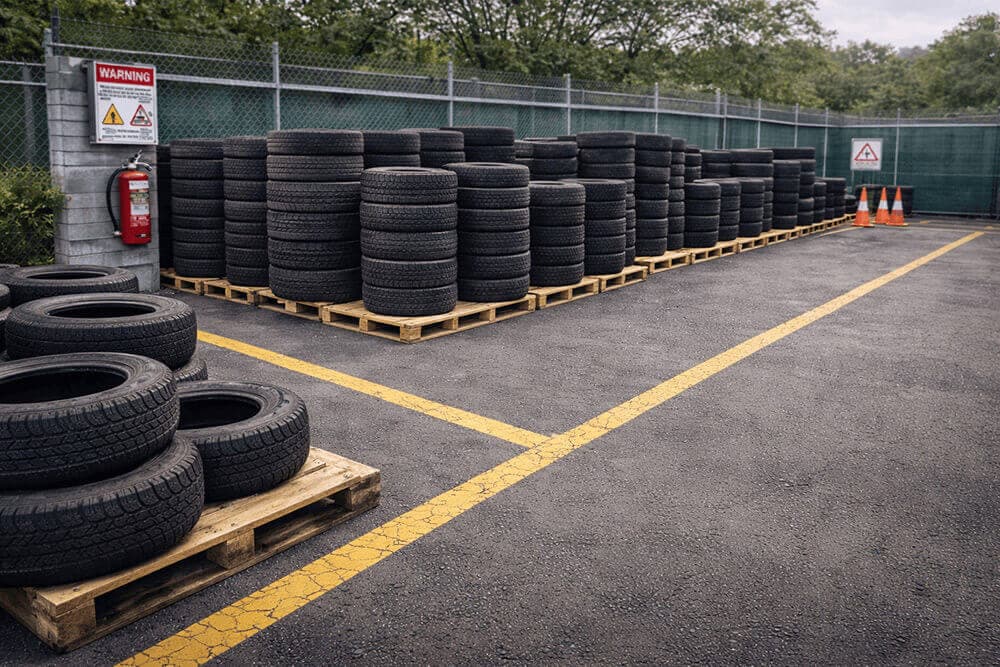
- The Hard-Boundary Zone: Mark out a dedicated area for used tyres using floor tape or signage. If tyres are allowed to 'drift' across the yard, they eventually block access and create chaos.
- The Access Lane Priority: A collection vehicle needs clear, unobstructed access to the storage zone. If we have to wait for cars to be moved or pallets to be shifted, your site becomes inefficient.
- Stack Stability Rules: Limit stack heights and ensure tyres are 'laced' or stacked flat where possible. Unstable piles are a handling risk for your team and our drivers.
- Waste Stream Integrity: Tyres must be kept free from general waste, liquids, and scrap metal. Mixed waste streams often lead to collection delays and compliance red flags.
- The 'Friday Count': Appoint one person to perform a 5-minute visual audit every Friday. Managing by fact, not by 'feeling,' is the hallmark of a professional site.
Implementing the '30-Second Audit'
How do you know if your site is actually ready? Use the 30-Second Audit. Stand at your workshop entrance and look toward your tyre zone. If you can't see a clear path to the tyres, or if you see mixed waste in the pile, you aren't ready.
This simple visual check, performed daily by a supervisor, ensures that the 'rubber mountain' never grows out of control. It turns a massive compliance task into a series of tiny, manageable habits that keep your site looking professional and prepared for any spot inspection from the EPA or local council.
Habits of High-Performing NSW Dealer Sites
The top 10% of dealers we work with don't have better equipment; they have better habits. They treat tyre storage as a core part of their brand. A clean, organized yard tells your customers that if you're this disciplined with your waste, you'll be even more disciplined with their vehicle.
Moving from 'getting by' to 'getting it right' takes about 30 minutes of initial setup and 5 minutes of daily maintenance. The payoff is a yard that works for you, rather than against you.
Elevate Your Site Standards
Site readiness is the foundation of a reliable recovery pathway. If your current storage feels like a liability, let's turn it into an asset.
Read our Scheduled Pickup Guide to see how to align your new storage routine with a recurring collection cycle, or contact ATR to discuss a site-specific storage plan.
Related Insights: Ensure your team knows the drill with our Pre-Pickup Prep Guide.
Next Step
Turn the guidance into a workable pickup plan
If you are reviewing tyre collection providers, compare the commercial tyre pickup services, request a site-specific collection plan through ATR contact, or review local coverage for Sydney, Newcastle, and Wollongong.