Practical Guide
This article is written for NSW tyre shops, workshops, dealers, warehouses, and fleet depots that want cleaner operations, easier pickups, and stronger compliance routines.
The Lifecycle of a Casing
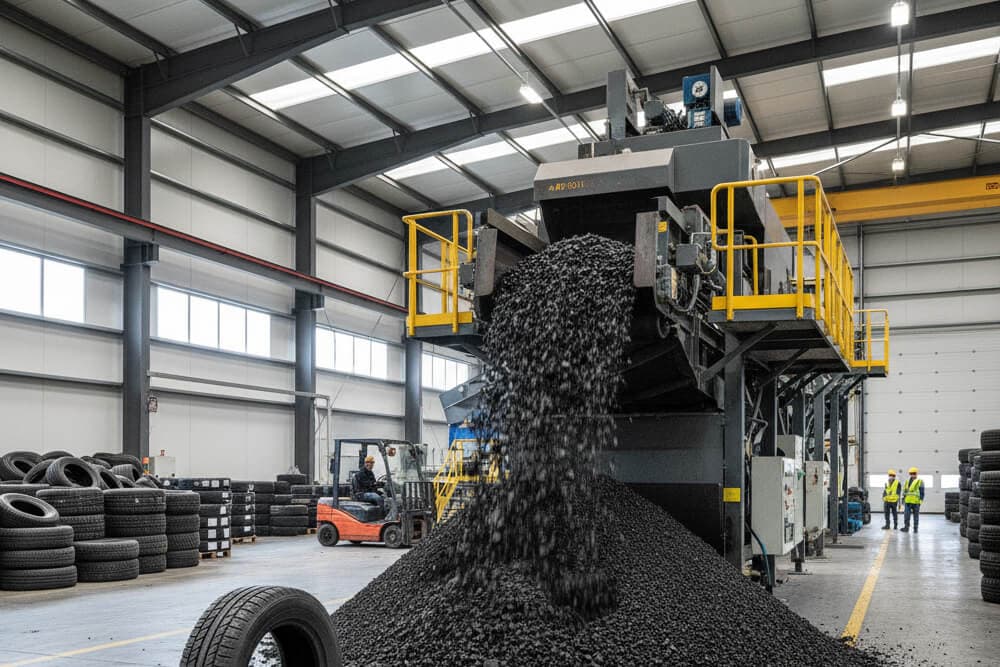
What happens after the collection truck pulls away from your shop? For many operators, the process is a mystery. But understanding the 'Engineering of the Exit' is key to valuing the service you receive. Modern tyre recycling is a high-precision industrial workflow designed to extract maximum value from every casing, transforming a bulky liability into a range of versatile raw materials.
The journey from a worn-out tread to a recycled resource involves several critical stages, each requiring specialized equipment and strict quality control. Behind every professional collection is a complex network of logistics and technology working to close the loop.
Stage 1: Primary Processing & Sorting
The workflow begins long before the shredder starts. Every load that enters the facility is first sorted by size, type, and condition. This 'Receiving Audit' determines the most efficient recovery pathway for that specific casing.
- Visual Inspection: Tyres are checked for major contaminants (rims, massive debris, liquids) that could damage downstream machinery.
- Category Selection: Passenger, commercial, and earthmover tyres require different processing settings and are grouped accordingly.
- Pathway Assignment: High-quality casings may be diverted for specific industrial uses, while the majority move into the secondary processing stream.
Stage 2: Size Reduction & Steel Liberation
The heart of the facility is the shredding line. Here, the physical structure of the tyre is systematically broken down through multiple stages of reduction:
Primary Shredding: Large-scale primary shredders break the whole tyres into 'roughs'—pieces roughly 50-150mm in size. During this stage, a significant portion of the internal steel wire is liberated and removed using high-intensity magnets.
Secondary Granulation: The roughs move into high-speed granulators that further reduce the rubber into smaller, uniform chips. This process continues until the rubber is freed from almost all textile and steel reinforcements.
Stage 3: The Recovery Pathways
The final output of the workflow depends on the intended end-use. Modern facilities produce three primary 'Resource Streams':
- Tyre Derived Fuel (TDF): Uniform rubber chips used as a high-energy, lower-carbon alternative to coal in industrial kilns and boilers.
- Crumb Rubber: Fine rubber granules used in civil engineering, including 'rubberized asphalt' for roads, playground surfaces, and athletic tracks.
- Steel Recovery: The extracted high-tensile steel is baled and sent to foundries to be manufactured into new steel products.
Excellence Starts at the Site
The efficiency of this entire engineering chain depends on the quality of the 'Inbound Stream.' When your shop maintains clean storage and follows a site-prep routine, you are making this entire recovery process faster and more effective.
Learn more about our Recycling Technology, or request a tour of our partner facilities to see the engineering in action.
Further Reading: See how Site Readiness directly impacts recovery quality.
Next Step
Turn the guidance into a workable pickup plan
If you are reviewing tyre collection providers, compare the commercial tyre pickup services, request a site-specific collection plan through ATR contact, or review local coverage for Sydney, Newcastle, and Wollongong.