Practical Guide
This article is written for NSW tyre shops, workshops, dealers, warehouses, and fleet depots that want cleaner operations, easier pickups, and stronger compliance routines.
Truck tyres change the collection equation
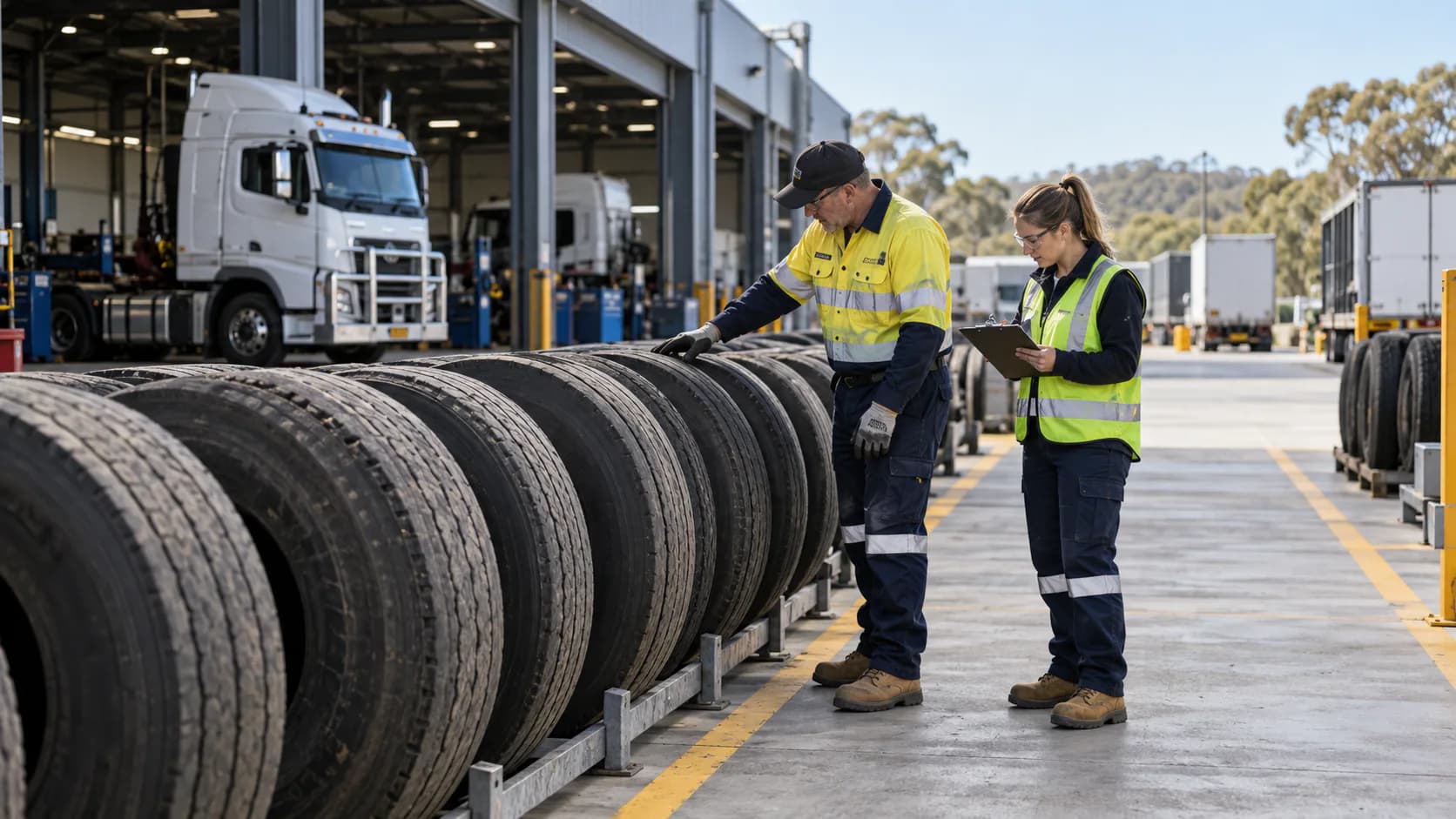
A depot can replace a relatively small number of truck tyres and still lose a large amount of usable yard space. Each casing is heavier and bulkier than a passenger tyre, handling takes longer, and mixed sizes can make a load harder to estimate. A pickup rule designed for a small workshop rarely works at a transport operation.
The right truck tyre collection plan starts where fleet maintenance finishes. Once a tyre is removed from service, staff need a clear decision about where it goes, how it is counted, who books collection, and what evidence is retained after it leaves the depot.
Who needs a dedicated truck tyre pickup plan
Truck tyre volume does not only come from large national fleets. Independent transport operators, bus depots, civil contractors, heavy-vehicle repairers, mobile tyre services, and regional workshops can all generate loads that need more planning than a standard passenger-tyre pickup.
- Fleet depots: scheduled maintenance can create predictable waves of removed casings.
- Heavy-vehicle workshops: customer work produces mixed ownership, sizes, and collection timing.
- Transport contractors: project mobilisation or demobilisation can leave short-term tyre backlogs.
- Regional operators: route distance makes accurate counts and earlier booking more important.
- Multi-site fleets: head office needs comparable records even when each depot produces different volume.
Details the collector needs
- Truck tyre count by approximate size or category
- Whether rims, tubes, or unrelated waste are present
- Exact suburb and collection address
- Loading access, opening hours, and site contact
- One-off clear-out or recurring pickup requirement
Problems accurate details prevent
- Wrong vehicle or insufficient collection capacity
- Unexpected handling at the loading point
- Partial pickups that leave the depot under pressure
- Pricing changes caused by an inaccurate load description
- Delays while staff reorganise the collection area
Set the trigger from storage capacity, not guesswork
Counting truck tyres matters, but the better booking trigger also considers the physical space they occupy. A depot with a narrow loading lane may need collection at a lower count than a larger yard. The trigger should leave enough room for the next maintenance shift and allow the collection vehicle to reach the tyre area safely.
Start with the last three replacement cycles. Note the number and type of tyres removed, how quickly the staging area filled, and whether collection happened before staff began using a second location. That gives the depot a defensible starting cadence instead of a schedule chosen from memory.
- Normal flow: use a recurring threshold or calendar-based pickup.
- Maintenance campaign: forecast the replacement count and reserve an additional collection.
- Inherited backlog: clear old stock separately before measuring the normal weekly pattern.
- Unexpected failures: define who can approve a booster pickup without waiting for overflow.
Keep removed casings sorted enough to make decisions
Do not assume every removed truck tyre has the same destination. Fleet policy, casing condition, provider requirements, and available downstream pathways may differ. If a tyre is being held for inspection, warranty review, repair, or a confirmed retreading assessment, identify it before it enters the waste collection area.
Tyres intended for commercial collection should stay separate from rims, oils, batteries, general workshop waste, and unidentified parts unless the provider has agreed otherwise. Simple separation improves load accuracy and reduces arguments about what was included after the truck arrives.
Connect collection records to fleet maintenance
The maintenance system shows why tyres came off vehicles. The collection record shows how they left the site. Linking those two views helps fleet managers spot unexplained differences, answer customer or contract questions, and check whether disposal volume broadly matches replacement activity.
NSW waste-tyre movements that meet the applicable threshold must be tracked through the Integrated Waste Tracking Solution. The NSW EPA tracking guidance identifies the threshold as 20 or more tyres, or 200 kilograms or more, in a single load. Operators should confirm current requirements for each movement and retain the relevant collection and destination records.
- Collection date, depot, site contact, and pickup reference
- Truck tyre count or load estimate and any mixed tyre categories
- Transporter and vehicle details supplied for the movement
- Receiving facility and available consent or licence information
- Dockets, invoices, IWTS references, and exception notes
A collection-day check for heavy-vehicle sites
- Confirm the load: recount truck tyres and identify anything that was not included in the booking.
- Protect the route: keep trailers, forklifts, pallets, and customer vehicles away from the loading lane.
- Brief the site contact: make one person available to confirm the load and resolve access questions.
- Close the record: save the collection reference and destination evidence on the same day.
- Review the trigger: adjust the next booking if the depot reached capacity too early or paid for avoidable urgency.
Build a truck tyre pickup plan around the depot
Truck tyre collection works best when tyre size, maintenance timing, yard access, and records are treated as one operating problem. Accurate load details help the collector plan; a clear trigger protects the depot; and complete records give fleet managers evidence after the tyres leave.
For broader fleet planning, read Fleet End-of-Life Tyre Management in NSW. Compare quote factors in Tyre Disposal Costs in NSW, or prepare a large reset with Bulk Tyre Collection in NSW. To discuss passenger, light-truck, truck, or mixed commercial stock, explore Commercial Tyre Disposal NSW or contact ATR Eco with your tyre count, suburb, and access details.
Common Questions
Common questions about Truck Tyre Collection in NSW: A Practical Guide for Fleet Depots
Does ATR Eco collect used truck tyres in NSW?
ATR Eco accepts enquiries for truck and commercial tyre collection. Service planning depends on tyre quantity and size, site location, access, load condition, and whether the requirement is recurring or a bulk clear-out.
What information is needed for a truck tyre collection quote?
Provide the approximate count, tyre sizes or categories, suburb, site access, opening hours, whether rims or other waste are present, and the preferred pickup frequency.
How should a fleet depot store used truck tyres before pickup?
Use a nominated, accessible area that keeps tyres controlled and separate from ignition sources and unrelated workshop waste. Storage arrangements should follow current site, fire-safety, and NSW waste guidance.
When must a waste tyre load be tracked in NSW?
Current NSW EPA guidance states that movements within NSW involving 20 or more tyres, or 200 kilograms or more, in a single load must be tracked through IWTS. Check the current guidance for the specific movement.
Next Step
Turn the guidance into a workable pickup plan
If you are reviewing tyre collection providers, compare the commercial tyre pickup services, the dedicated used tyre collection NSW page, or the broader tyre disposal for businesses NSW page. You can also request a site-specific collection plan through ATR contact, or review local coverage for Sydney, Newcastle, Wollongong, Central Coast, and Blue Mountains.