Practical Guide
This article is written for NSW tyre shops, workshops, dealers, warehouses, and fleet depots that want cleaner operations, easier pickups, and stronger compliance routines.
The short answer
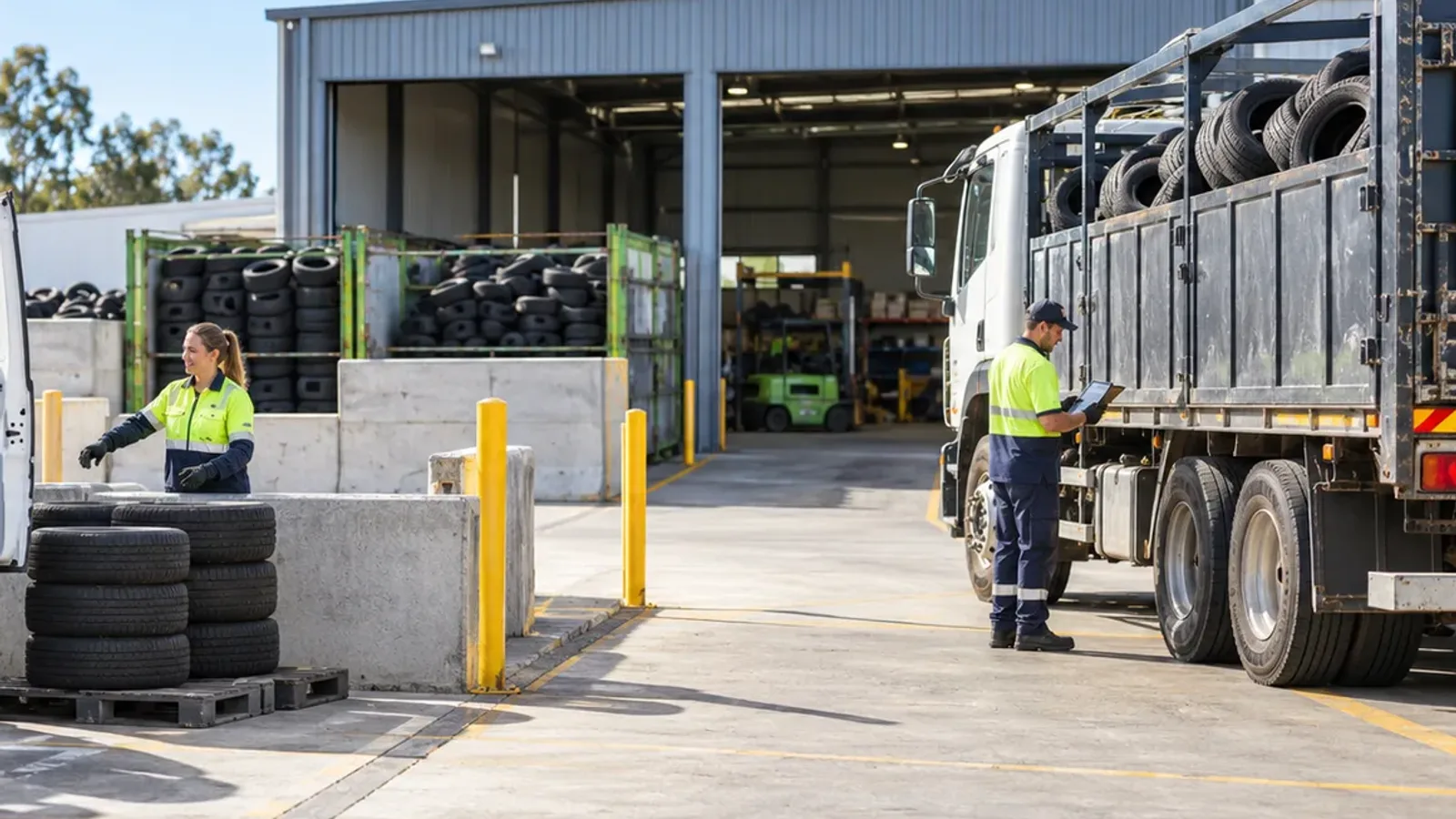
For most tyre shops, dealerships, fleet depots and warehouses, commercial pickup is the better fit. It keeps staff on site, avoids using a business vehicle for waste transport and gives the collection team a clear view of the load before arrival.
ATR can also consider small commercial drop-offs at Homebush West. These must be arranged in advance. The team needs to confirm the tyre types, quantity and delivery time before you load the vehicle. Drop-off is not a walk-in service.
Book a pickup when
- Tyres build up every week or month
- The load includes truck, OTR or mixed tyres
- You are clearing a backlog or full storage bay
- Sending staff off site would interrupt the workshop
- The site is outside the immediate Homebush area
- You need a repeatable service across several locations
Ask about drop-off when
- The commercial load is small and easy to count
- The tyres are already sorted and described
- You have a suitable vehicle and can secure the load
- Homebush West is practical for your business
- ATR has approved the load and delivery time
Why pickup works for most businesses
Used tyres rarely arrive as a one-off problem. A busy workshop produces them steadily, and a fleet can create a sudden batch during a replacement program. Collection deals with that pattern without adding another trip to the working day.
The service can be planned around the tyres you actually have. Passenger, light-commercial, truck and OTR tyres take up different amounts of space. Rims, unusual sizes and mixed stock also need to be identified. Sending photos and an estimated count allows ATR to plan the vehicle, timing and access before collection day.
Sites with regular volume can arrange a recurring service or book when the storage area reaches an agreed level. See the scheduled pickup guide for recurring loads and the bulk collection guide for clear-outs.
When a small drop-off may be practical
A nearby workshop with a small, sorted load may find drop-off convenient. That does not mean every load can be accepted. ATR must check the tyre categories, quantity, condition and proposed delivery time first.
Do not set out with truck tyres, OTR tyres, tyres on rims, contaminated stock or mixed workshop waste unless those items have been disclosed and approved. The facility can only prepare for the load it has been told about.
If the same business needs to make repeated trips, collection is usually the better long-term arrangement. Staff time, fuel, vehicle availability, loading and unloading all form part of the real cost of self-delivery.
What to send when requesting collection
A useful enquiry does not need a formal stocktake. ATR needs enough information to understand the job and spot anything that requires a different plan.
- Location: collection suburb, address and site contact.
- Quantity: estimated count for each tyre category.
- Tyre details: passenger, light-commercial, truck, OTR, rimmed or unusual stock.
- Photos: one wide view of the load plus any unusual tyres.
- Access: gates, narrow lanes, loading zones and suitable collection times.
- Service need: one-off, bulk, recurring or time-sensitive collection.
Before asking about drop-off
Contact ATR before loading the vehicle. Provide the same tyre details and photos you would send for a pickup request. If drop-off is suitable, ATR will confirm what can be delivered and when.
Use a vehicle that can carry the tyres safely, secure the load and keep the receiving record after delivery. If the load changes after approval, tell ATR before travelling.
NSW transport rules still apply
Waste tyres must be taken to a place that can lawfully receive them. NSW EPA guidance also calls for written records covering the transporter, vehicle, quantity and destination.
A load moved within NSW must be tracked through the Integrated Waste Tracking Solution when it contains 20 or more tyres, or weighs 200 kilograms or more. Businesses transporting their own tyres should understand their responsibilities before the vehicle leaves the site. Check the current NSW EPA tyre tracking guidance.
If the quantity or process is unclear, ask ATR about collection rather than transporting the tyres first.
Ready to arrange collection?
Send ATR your suburb, tyre types, estimated quantity, photos and preferred timing through the contact page. The team can recommend a one-off, bulk or recurring pickup based on the load.
If you only have a small commercial load near Homebush West, mention that in the enquiry. ATR will advise whether a pre-arranged drop-off is suitable.
Common Questions
Tyre pickup and drop-off FAQs
Should my business book tyre pickup or use drop-off?
Commercial pickup is usually the better option for recurring, bulky, mixed or regional loads. ATR may approve a small commercial drop-off at Homebush West after reviewing the load and delivery timing.
Can I arrive at ATR Eco without booking?
No. Commercial drop-off must be approved in advance. Contact ATR with the tyre types, quantity and photos before loading or travelling.
What types of tyres should I include in my enquiry?
List passenger, light-commercial, truck and OTR tyres separately. Also identify tyres on rims, unusual sizes, contamination and any mixed materials.
When does NSW tyre tracking apply?
IWTS tracking applies to a load moved within NSW when it contains 20 or more tyres, or weighs 200 kilograms or more. Check current NSW EPA requirements before transport.
What does ATR need to quote a pickup?
Provide the collection suburb, estimated count by tyre type, photos, access details, preferred timing and whether the job is one-off, bulk or recurring.
Next Step
Turn the guidance into a workable pickup plan
If you are reviewing tyre collection providers, compare the commercial tyre pickup services, the dedicated used tyre collection NSW page, or the broader tyre disposal for businesses NSW page. You can also request a site-specific collection plan through ATR contact, or review local coverage for Sydney, Newcastle, Wollongong, Central Coast, and Blue Mountains.