
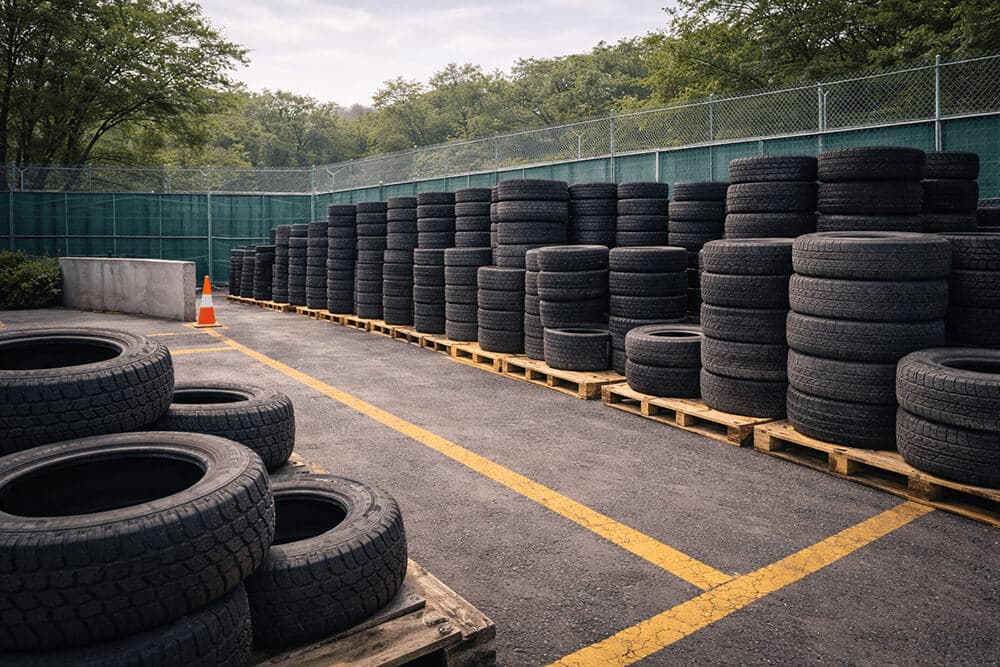
For tyre shops, dealers, and warehouse operators, used tyre disposal is not a side task. It is a business control issue tied to safety, compliance exposure, and day-to-day operational flow.
When disposal is handled inconsistently, sites experience stockpile pressure, avoidable audit stress, and higher disruption risk. A proper disposal framework turns this into a predictable, lower-risk process.
Business protection outcomes
- Reduces site-risk created by overflow storage and irregular handling practices.
- Improves compliance confidence through documented collection and traceability pathways.
- Protects brand trust by showing customers and partners that tyre waste is handled responsibly.
- Supports smoother operations with fewer urgent clean-up events and less workflow interruption.
Environmental protection outcomes
Proper disposal prevents tyres from drifting into uncontrolled outcomes and keeps material in managed recovery channels. That means reduced landfill pressure, better resource recovery, and stronger environmental accountability at the point of collection.
For NSW businesses, this is not just an environmental statement. It is a practical operating standard that aligns with customer expectations and modern procurement requirements.
What proper disposal looks like in practice
- Set tyre handling zones and count thresholds per site.
- Match collection frequency to real volume, not emergency overflow.
- Use a licensed collection partner with clear handling records.
- Review volume and timing performance monthly to tighten operations.
Final takeaway
Proper tyre disposal protects your business and the environment at the same time. The key is consistency: clear collection planning, compliant handling, and documented execution that stands up under operational and regulatory scrutiny.
To apply this at site level, review ATR's commercial collection services and book a NSW pickup consultation.