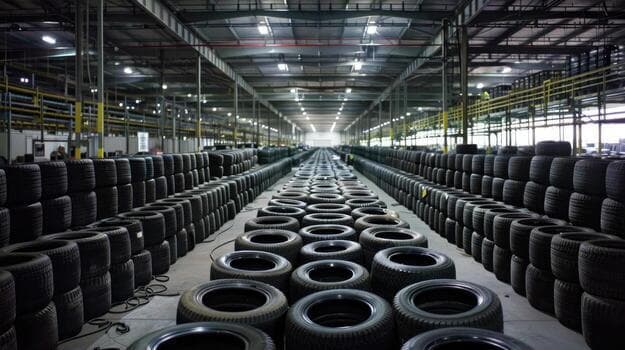
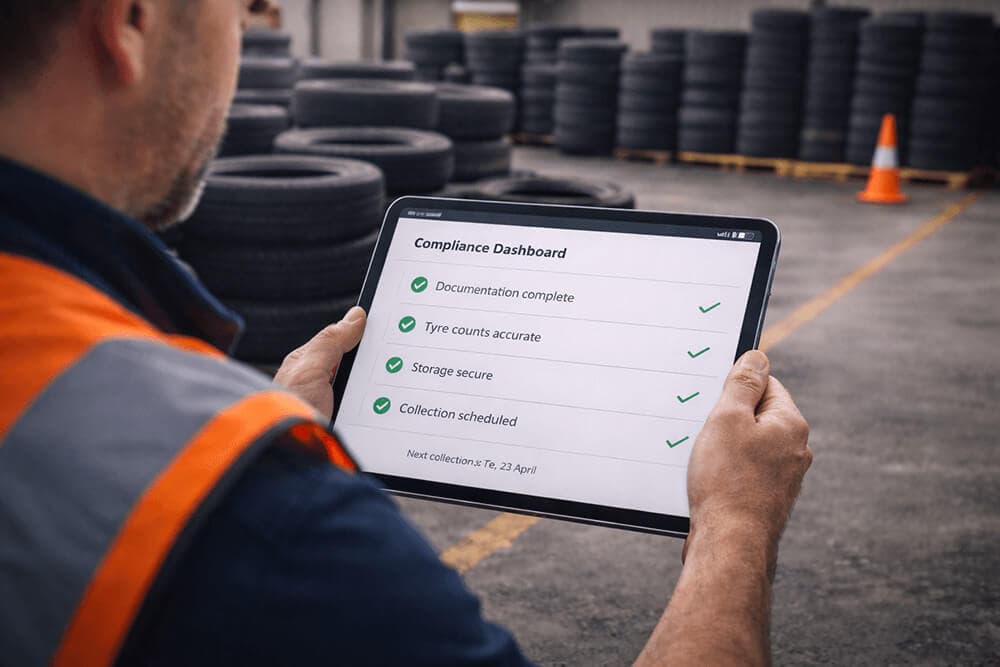
Most tyre shops do not struggle because they lack effort. They struggle because tyre outflow is managed reactively. Compliance pressure usually appears when stockpiles rise and collections become urgent rather than planned.
Scheduled collection models solve this by turning disposal into a routine operating process. The result is better control, stronger documentation, and fewer site disruptions.
Common compliance pain points
- Storage areas exceeding practical limits before pickup is arranged.
- Inconsistent records that make audits and internal checks harder.
- Last-minute collection requests that disrupt workshop planning.
- Unclear ownership of tyre handling responsibility across teams.
What scheduled collections improve
- Predictable stock movement and lower overflow risk.
- Cleaner scheduling around workshop and yard operations.
- Clearer evidence of compliant handling and load tracking.
- More consistent team execution with fewer urgent decisions.
Recommended operating structure for tyre shops
- Define a weekly tyre count checkpoint and storage threshold.
- Set a baseline scheduled pickup frequency aligned to real turnover.
- Assign one team owner for booking, records, and collection coordination.
- Review service performance monthly and adjust cadence proactively.
What to ask your collection partner
- How are load records and compliance documentation handled?
- What collection windows are available for recurring schedules?
- How are volume spikes managed without causing site backlog?
- What communication process is used when schedules need adjustment?
Final takeaway
Compliance and scheduled collections are not separate topics. They are part of the same operational system. Tyre shops that manage them together reduce risk, improve reliability, and keep day-to-day operations cleaner.
For next steps, review ATR's service options, see our sustainability approach, or request a pickup plan.